Sold Out
East River by Ferry: Energy Infrastructure Tour
NYC Ferry and Cullen Brown
Financial District, Manhattan
Sat, October 18th, 2025
11:45am — 2:15pm
2:30pm — 5:00pm
Sun, October 19th, 2025
2:30pm — 5:00pm
The lives we live in NYC are made possible thanks to infrastructure that works well (most of the time) even though we don't know how it works! Electricity, water, heat/steam, and transit systems are all built and maintained to benefit the maximum number of people with minimum disruption.
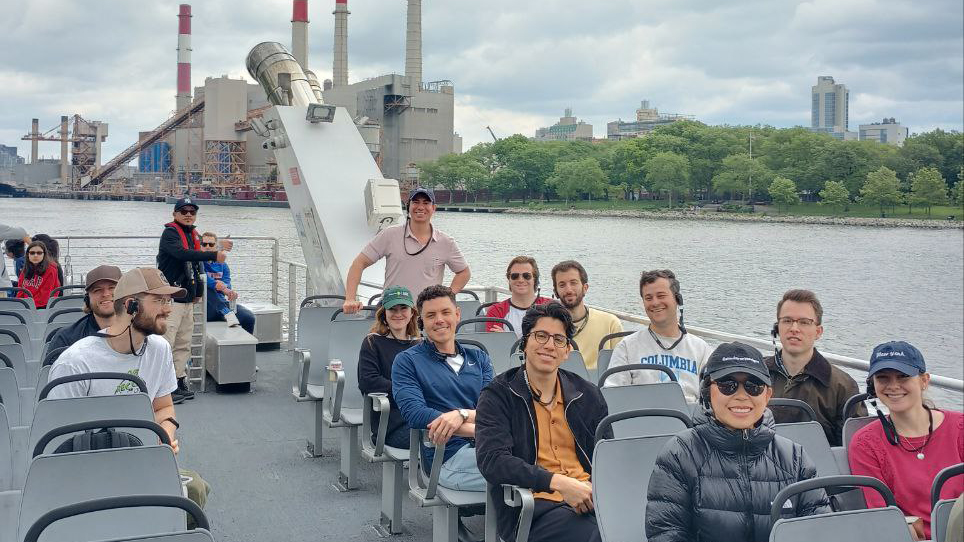
On this tour, ride the NYC Ferry Soundview line to learn about the past, present, and future of infrastructure (with a focus on electricity) along the east coast of Manhattan, the south coast of the Bronx, and the north coast of Queens. The goal here is to understand how and why the systems that make our lives possible came to exist, and appreciate how and why they are evolving—and they are best seen from the water!
Highlights include the Con Edison East 14th St Steam Plant, the former site of the Kips Bay (The Copper) and Waterside (Freedom Plaza) power plants, Con Ed East 60th St Steam Plant (under the Queensboro Bridge), Con Ed East 74th St Steam Plant, "Peaker" plants in the South Bronx, Rikers Island, and Astoria Generation I & II—some the largest and newest power plants in NYC.
An OHNY ticket does not guarantee a space onboard NYC Ferry. Participants will be required to show a valid NYC Ferry ticket when boarding both legs of the tour and need to purchase two NYC Ferry tickets—one for the first leg to Throgs Neck and one for the return leg.
Earpieces will be provided for participants to listen to the tour.
The tour will be mostly inside the ferry boat, but participants are welcome to ascend to the upper deck. Bathrooms and snacks/beverages are available on the ferry.
Children are welcome accompanied by an adult. All participants, including children, must have a ticket.
Water Works: Discover how water shapes the city, from the system of pipes that delivers 1 billion gallons of clean water into (and out of) homes daily, to the working waterfront that drove the city's economy for centuries, to the challenges of adapting 520 miles of shoreline for a wetter future. Explore more.
What's Nearby
Gownaus, Brooklyn
Sunset Park, Brooklyn
Randalls Island, Manhattan