Sat, October 18th, 2025
9:30am — 11:00am
11:30am — 1:00pm
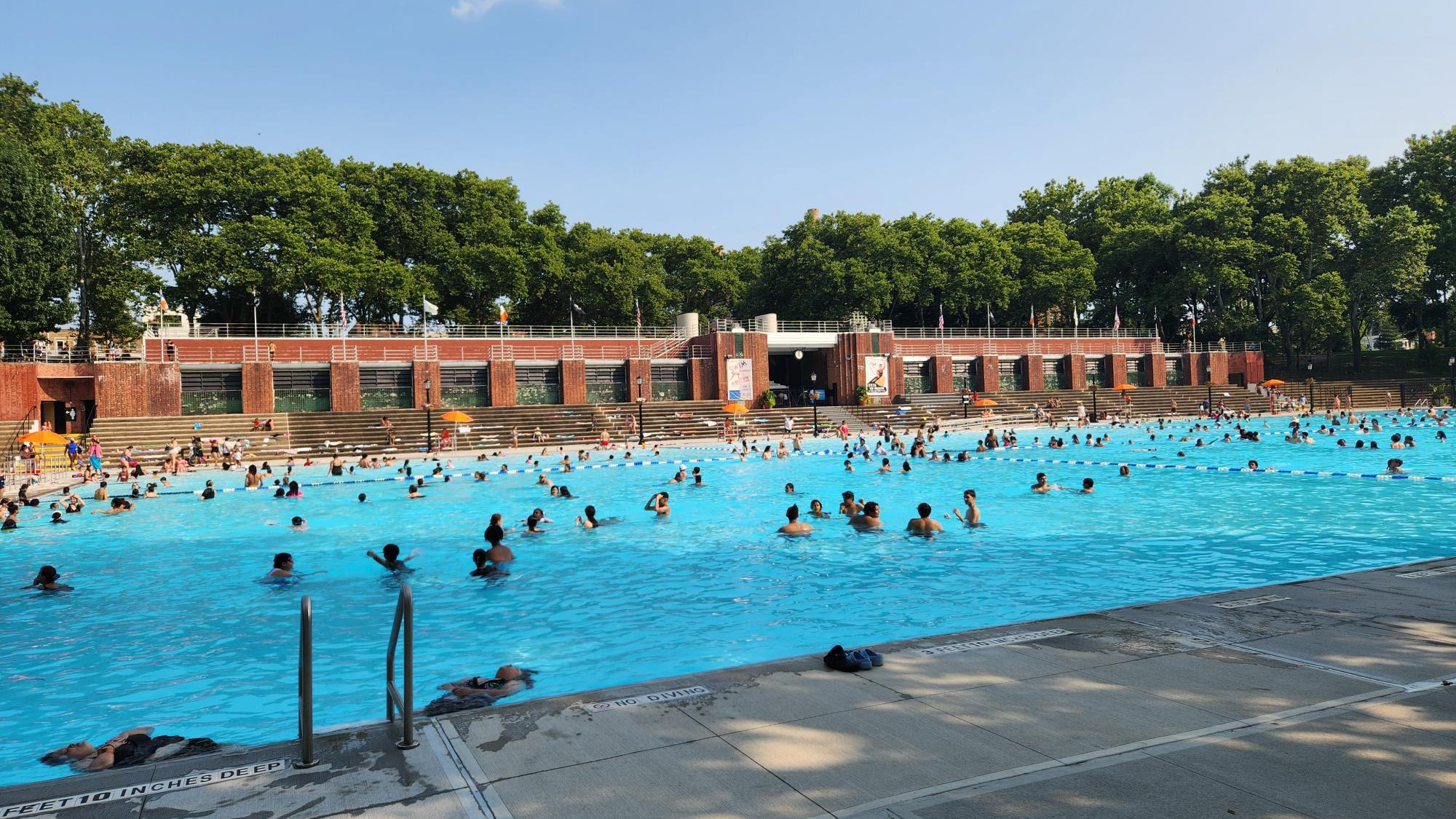
Astoria Pool is one of eleven immense outdoor public pools opened in 1936 during a summer that broke local heat records, not unlike today. This heroically scaled pool—the largest in the city to this day—was financed by the Federal Works Progress Administration (WPA) as part of an effort to alleviate adverse health conditions and provide safe recreation for New Yorkers from predominantly working-class communities where people frequently swam in often treacherous and polluted rivers and streams.
Astoria is distinguished by its streamlined and simple forms, decorative glass block, deco-style steel railings, and Art Moderne style ticket booth. When opened, it featured separate swimming, diving and wading areas, perimeter bleachers, locker rooms which served as gyms during non-summer months, massive filtration systems, heating units, and even underwater lighting.
Framed by the Triborough and Hell Gate bridges, the pool accommodated 5,570 bathers on opening day. WPA administrator Harry Hopkins called it “the finest pool in the world.” In 1936 and 1964, the pool hosted the Olympic Trials for the U.S. Swim and Diving Teams. In 2006, Astoria Pool was designated an official New York City landmark.
Over the past decade, NYC Parks has invested over $30M to restore the multi-level diving board, create a performance plaza, install a new filter system, pool deck and tub, and create a many-jetted interactive spray feature. On this tour you will view original architectural finishes, visit the massive changing rooms, restrooms, showers, and the state-of-the-art filter plant, a space never before opened to the public. Tours will be led by Mark A. Focht, PLA, FASLA, Acting First Deputy Commissioner of NYC Parks.
The site is not ADA accessible. There are opportunities for seating throughout the tour.
There will be no functioning toilets, sinks, or water fountains in the building. The facility is not heated. If it is a chilly day, guests should dress warmly.
Water Works: Discover how water shapes the city, from the system of pipes that delivers 1 billion gallons of clean water into (and out of) homes daily, to the working waterfront that drove the city's economy for centuries, to the challenges of adapting 520 miles of shoreline for a wetter future. Explore more.
1936: John M. Hatton
What's Nearby
Randalls Island, Manhattan
Long Island City, Queens
Crown Heights, Brooklyn